 moneydif.com
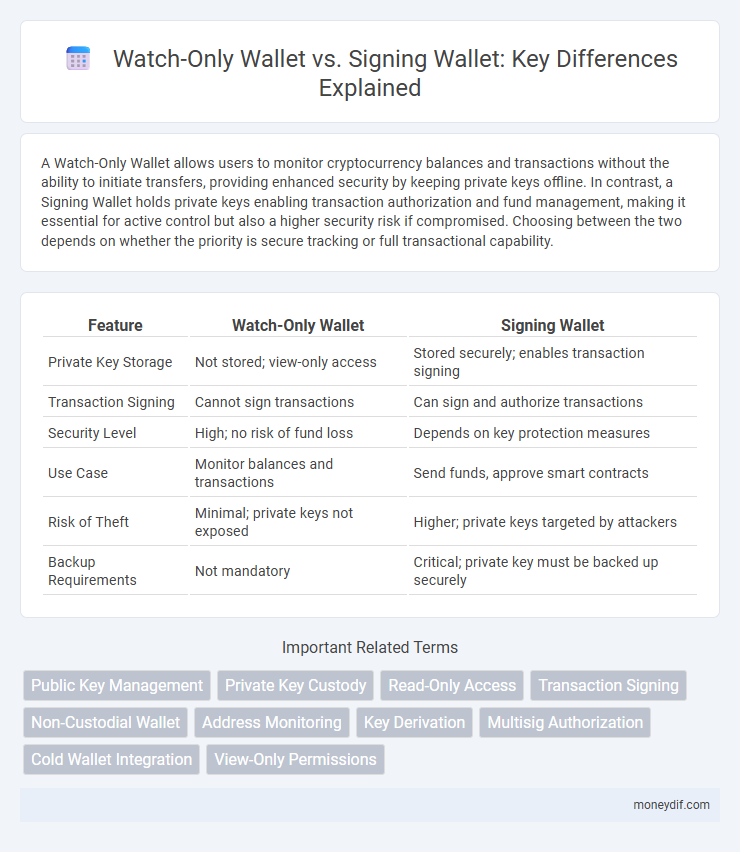
 A Watch-Only Wallet allows users to monitor cryptocurrency balances and transactions without the ability to initiate transfers, providing enhanced security by keeping private keys offline. In contrast, a Signing Wallet holds private keys enabling transaction authorization and fund management, making it essential for active control but also a higher security risk if compromised. Choosing between the two depends on whether the priority is secure tracking or full transactional capability.
Table of Comparison
| Feature | Watch-Only Wallet | Signing Wallet |
|---|---|---|
| Private Key Storage | Not stored; view-only access | Stored securely; enables transaction signing |
| Transaction Signing | Cannot sign transactions | Can sign and authorize transactions |
| Security Level | High; no risk of fund loss | Depends on key protection measures |
| Use Case | Monitor balances and transactions | Send funds, approve smart contracts |
| Risk of Theft | Minimal; private keys not exposed | Higher; private keys targeted by attackers |
| Backup Requirements | Not mandatory | Critical; private key must be backed up securely |
Introduction to Watch-Only and Signing Wallets
Watch-only wallets provide users with the ability to monitor cryptocurrency balances and transactions without exposing private keys, enhancing security by preventing unauthorized spending. Signing wallets, on the other hand, allow users to both view and authorize transactions through private key access, enabling full control over asset management. Understanding the distinction between watch-only and signing wallets is crucial for optimizing security and transaction capabilities in digital asset management.
What Is a Watch-Only Wallet?
A watch-only wallet allows users to monitor cryptocurrency transactions and balances without possessing the private keys needed for signing or spending assets. This type of wallet provides enhanced security by preventing unauthorized transactions, as it cannot initiate transfers or access funds. Ideal for auditing and tracking purposes, watch-only wallets are commonly used in environments requiring oversight without risking asset control.
What Is a Signing Wallet?
A signing wallet is a type of cryptocurrency wallet that allows users to approve transactions with a private key without exposing it publicly, ensuring secure access and control over digital assets. Unlike watch-only wallets, signing wallets facilitate the creation and authorization of transactions, making them essential for actively managing funds on the blockchain. These wallets are crucial for maintaining security while enabling seamless interaction with decentralized applications and blockchain networks.
Key Differences Between Watch-Only and Signing Wallets
Watch-only wallets allow users to monitor cryptocurrency balances and transactions without access to private keys, ensuring enhanced security and reducing the risk of unauthorized spending. In contrast, signing wallets hold private keys enabling transaction authorization, which requires robust security measures to protect against theft or loss. Understanding the key difference between these wallets lies in control: watch-only wallets provide read-only access, while signing wallets enable full transaction signing capabilities.
Security Implications: Watch-Only vs Signing Wallet
Watch-only wallets enhance security by allowing users to monitor transactions and balances without exposing private keys, significantly reducing the risk of unauthorized access or theft. Signing wallets store and use private keys to authorize transactions, making them critical for transaction execution but vulnerable if the keys are compromised. Implementing watch-only wallets for monitoring while isolating signing wallets in secure environments offers a balanced approach to safeguarding digital assets.
Use Cases for Watch-Only Wallets
Watch-only wallets enable users to monitor cryptocurrency balances and transactions without exposing private keys, enhancing security by preventing unauthorized spending. Ideal for auditors, investors tracking multiple addresses, or cold storage owners who wish to verify holdings without risk. These wallets support real-time balance updates and transaction histories while maintaining complete control over signing and sending funds exclusively through separate signing wallets.
Use Cases for Signing Wallets
Signing wallets enable users to authorize transactions, making them essential for managing cryptocurrency assets rather than just viewing balances. These wallets support secure interactions with blockchain networks, facilitating activities like sending funds, participating in decentralized finance (DeFi) protocols, and executing smart contracts. Use cases for signing wallets include active trading, asset management, and verifying ownership during token transfers.
How to Set Up Watch-Only and Signing Wallets
To set up a Watch-Only Wallet, import the public key or address of the wallet into your application without adding the private key, enabling transaction monitoring without spending capabilities. For a Signing Wallet, securely generate or import the private key within a hardware device or software wallet to authorize and sign transactions directly. Confirm proper backup of keys and use compatible wallet software for seamless operation of both wallet types.
Pros and Cons: Watch-Only vs Signing Wallet
Watch-only wallets provide enhanced security by allowing users to monitor transactions and balances without exposing private keys, reducing the risk of theft or unauthorized spending. Signing wallets enable full control over funds with transaction approval capabilities but require stringent security measures to protect private keys from compromise. While watch-only wallets are ideal for auditing and read-only access, signing wallets are essential for active management and executing transactions.
Choosing the Right Wallet Type for Your Needs
Watch-only wallets provide enhanced security by allowing users to monitor cryptocurrency balances and transactions without exposing private keys, making them ideal for users who need real-time tracking without spending capability. Signing wallets store private keys securely, enabling transaction authorization and fund management, suitable for active traders and those who require direct control over their assets. Selecting between watch-only and signing wallets depends on your security preferences and usage needs, balancing convenience with risk management in cryptocurrency operations.
Important Terms
Public Key Management
Public key management in watch-only wallets enables secure, read-only access to blockchain data without private key exposure, whereas signing wallets securely store private keys to authorize transactions.
Private Key Custody
Private key custody requires a signing wallet to securely store and use private keys, whereas a watch-only wallet only monitors transactions without holding private keys or enabling transaction signing.
Read-Only Access
Read-only access enables users to monitor transactions and balances in a watch-only wallet without exposing private keys, whereas a signing wallet permits transaction authorization by securely managing these keys.
Transaction Signing
Transaction signing requires a signing wallet holding private keys for authorization, whereas a watch-only wallet can monitor transactions without enabling any signing or spending capabilities.
Non-Custodial Wallet
Non-custodial wallets provide users full control over private keys, where watch-only wallets allow transaction monitoring without signing capability, whereas signing wallets enable secure transaction authorization through private key access.
Address Monitoring
Address monitoring enables real-time tracking of transactions for Watch-Only Wallets, while Signing Wallets provide secure authorization for spending funds on monitored addresses.
Key Derivation
Key derivation for watch-only wallets generates public keys to monitor transactions without exposing private keys, whereas signing wallets derive both private and public keys to authorize and sign transactions securely.
Multisig Authorization
Multisig authorization requires multiple signatures from designated signing wallets to approve transactions, while watch-only wallets provide real-time transaction monitoring without signing capabilities.
Cold Wallet Integration
Cold wallet integration enhances security by using a watch-only wallet for transaction monitoring and a signing wallet for offline private key authorization.
View-Only Permissions
Watch-only wallets provide view-only permissions allowing users to monitor balances and transactions without granting signing authority, unlike signing wallets that enable transaction authorization.
Watch-Only Wallet vs Signing Wallet Infographic