 moneydif.com
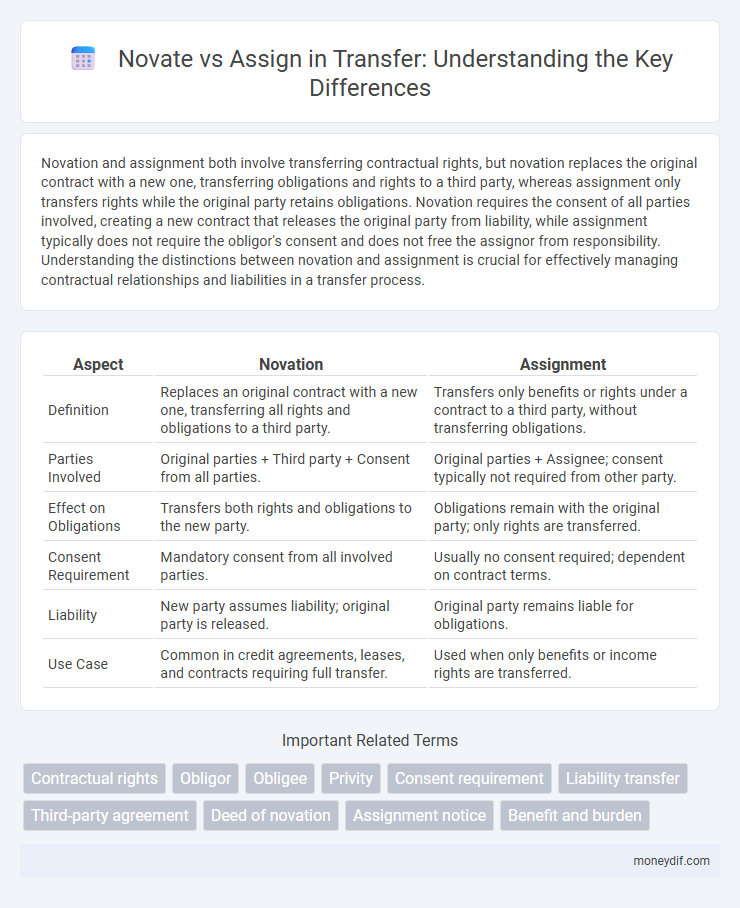
 Novation and assignment both involve transferring contractual rights, but novation replaces the original contract with a new one, transferring obligations and rights to a third party, whereas assignment only transfers rights while the original party retains obligations. Novation requires the consent of all parties involved, creating a new contract that releases the original party from liability, while assignment typically does not require the obligor's consent and does not free the assignor from responsibility. Understanding the distinctions between novation and assignment is crucial for effectively managing contractual relationships and liabilities in a transfer process.
Table of Comparison
| Aspect | Novation | Assignment |
|---|---|---|
| Definition | Replaces an original contract with a new one, transferring all rights and obligations to a third party. | Transfers only benefits or rights under a contract to a third party, without transferring obligations. |
| Parties Involved | Original parties + Third party + Consent from all parties. | Original parties + Assignee; consent typically not required from other party. |
| Effect on Obligations | Transfers both rights and obligations to the new party. | Obligations remain with the original party; only rights are transferred. |
| Consent Requirement | Mandatory consent from all involved parties. | Usually no consent required; dependent on contract terms. |
| Liability | New party assumes liability; original party is released. | Original party remains liable for obligations. |
| Use Case | Common in credit agreements, leases, and contracts requiring full transfer. | Used when only benefits or income rights are transferred. |
Novate vs Assign: Key Differences in Transfer Mechanisms
Novation involves replacing an original contract with a new one, where a third party takes on the rights and obligations, effectively releasing the original party from liability. Assignment transfers only the benefits or rights under a contract to another party, while the assignor remains liable for the performance of contractual obligations. Novation requires the consent of all parties involved, making it a more comprehensive transfer mechanism than assignment.
Understanding Novation and Assignment in Contract Law
Novation and assignment are distinct legal mechanisms for transferring contractual rights and obligations. Novation replaces the original party with a new one, requiring the consent of all parties involved to create a new contract and extinguish the old one. Assignment transfers only the benefits or rights under the contract to a third party without altering the original obligations or requiring consent from the obligor.
When to Choose Novation Over Assignment
Novation should be chosen over assignment when the original contract requires mutual consent for transfer or when the transfer involves substituting a new party who assumes all rights and obligations, thereby extinguishing the original contract. It is particularly important in situations where the original party must be released from liability or when the agreement contains anti-assignment clauses prohibiting assignment without approval. Opting for novation ensures clear legal effect and complete transfer of contractual responsibilities, preventing disputes related to unauthorized assignment.
Legal Implications of Novate and Assign in Agreements
Novation involves replacing an original party in a contract with a new party, transferring both rights and obligations, whereas assignment transfers only contractual rights to a third party without altering the obligations. Legal implications of novation include the requirement of consent from all original and new parties, ensuring full substitution and release of the original party from liabilities. In contrast, assignment does not extinguish the assignor's obligations, meaning the original party remains liable unless explicitly released, impacting risk and enforcement in agreements.
The Process of Novating vs Assigning a Contract
Novating a contract involves replacing the original party with a new party, requiring mutual consent from all involved and creating a new contractual relationship that extinguishes the original agreement. Assigning a contract transfers the rights or benefits under the contract to a third party but does not change the original party's obligations or the contract terms, and typically requires only the assignor's consent unless restricted. Novation demands comprehensive negotiation and documentation, while assignment is generally simpler and quicker but limited to transferring rights without altering contractual duties.
Risks and Benefits: Novate vs Assign in Transfers
Novation transfers both rights and obligations from one party to another, reducing the original party's liability and ensuring continuity in contracts, which minimizes legal risks but requires consent from all parties. Assignment transfers only the benefits or rights, leaving the original party liable for the obligations, increasing risk exposure if the assignee fails to perform. Choosing novation mitigates risks by fully replacing the original party, while assignment offers simpler implementation but retains residual liability.
Consent Requirements: Novation Compared to Assignment
Novation requires the explicit consent of all parties involved, including the original parties and the new party assuming the obligation, ensuring a complete transfer of rights and liabilities. Assignment generally only needs the consent of the assignor, while the assignee can often step into the assignor's position without obligating the other original party. Consent requirements in novation create a legally binding substitution, whereas assignment results in a delegation of benefits without necessarily altering obligations.
Practical Examples: Novation and Assignment in Action
Novation involves replacing an original party with a new one, transferring all rights and obligations within a contract, such as when a business sells its service agreement to another company that assumes full responsibility. Assignment, however, only transfers the benefits or rights of a contract, like when a landlord assigns the right to receive rent payments to a third party while retaining original contractual duties. In practice, novation requires all parties' consent to extinguish the original contract and create a new one, whereas assignment typically does not need the other party's approval unless explicitly restricted.
Impact on Parties: Novate vs Assign Explained
Novation transfers all rights and obligations from the original party to the new party, releasing the original party from future liabilities, directly impacting contractual relationships. Assignment only transfers benefits, allowing the assignor to remain liable, which means the original party retains obligations while the assignee gains rights. Understanding this difference is crucial for managing risk and responsibility during contract transfers.
Novate or Assign: How to Decide for Effective Transfers
Novation transfers both rights and obligations from one party to another, creating a new contract and releasing the original party from future liabilities, while assignment only transfers rights, leaving obligations with the assignor. Choosing novation is essential when full substitution of contractual parties and responsibilities is required, especially in complex commercial agreements or leases. Assignment is more suitable for simple rights transfer scenarios like receivables, where ongoing obligations remain with the original party.
Important Terms
Contractual rights
Novation transfers contractual rights and obligations to a new party, creating a new contract, while assignment only transfers rights without altering original obligations.
Obligor
An obligor's responsibilities remain directly enforceable by the obligee in novation, whereas in assignment, the obligor's duty shifts only if consent is granted and the assignee acquires the right to receive performance.
Obligee
The obligee holds the right to demand performance from the obligor and typically must consent to novation, whereas assignment transfers the obligee's rights without altering the obligor's obligations.
Privity
Privity refers to the direct legal relationship between parties to a contract, which is fundamentally altered in novation as the original contract is replaced by a new one involving a new party, transferring all rights and obligations. In contrast, assignment only transfers contractual benefits without creating privity between the assignee and the original obligor, leaving the assignor liable.
Consent requirement
Consent requirement varies as novation requires the consent of all parties involved to transfer obligations and rights, whereas assignment typically requires only the assignor's consent without necessarily involving the obligor.
Liability transfer
Liability transfer through novation legally replaces the original contract with a new one involving a new party, while assignment only transfers benefits or rights without transferring the underlying liabilities.
Third-party agreement
A third-party agreement involves transferring contractual rights or obligations through novation, which replaces the original party and requires consent from all parties, unlike assignment, which transfers rights without altering the original contract or requiring consent.
Deed of novation
A Deed of Novation legally transfers contractual obligations and rights from one party to another, replacing the original party and differing from an assignment which only transfers benefits without discharging the original party's liabilities.
Assignment notice
Assignment notices must clearly distinguish whether the contract rights are novated, transferring obligations to a new party, or assigned, transferring rights while original obligations remain.
Benefit and burden
Novation transfers both benefit and burden of a contract to a new party, whereas assignment only transfers the benefit, leaving the original party with the burden.
novate vs assign Infographic